
State of
the Field
Gathering
Report
123 people from 23 countries on what it takes to move capital
toward social, economic and ecological transformation.
Executive Summary
The field of financing systemic transformation (FST) is emerging through the work of people and organizations experimenting with new ways to mobilize resources, reshape financial practices, and support the transformation of social, economic, and ecological systems. As this work develops across domains and geographies, there is a growing need for spaces where actors can see beyond their own projects and immediate networks, learn from one another, and develop a more coherent understanding of the field as a whole.
The conversations captured here reveal a field with considerable energy, experimental activity, and ambition, but also unresolved questions about its boundaries, power dynamics, underlying assumptions, and pathways to meaningful change. Participants explored the relationship between transforming financial markets and moving beyond finance-centered approaches; the importance of community-led, Indigenous, and place-based practices; the need to rethink risk, wealth, and capital allocation; and the challenge of building coherence without erasing diversity.
Fifteen clusters are identified in the collective narrative. Collectively they point to the need to shift our topsy-turvy world in the service of finance and financial accumulation, to being in service of life and our highest values. The field’s success will be judged on its ability to change this. The clusters might be seen as key components in developing the pathway, including allocation of capital being grounded in place-based decision-making and developing relationships of equitable power grounded in a collective commitment to social, economic and environmental well-being.
This report is a snapshot rather than a comprehensive or representative survey of the entire field. Its value lies not only in the findings it presents, but also the conversations it will generate and the questions it can help actors pursue. This is the first of annual State of the Field reports co-created and shared in service of the field’s development. We hope that successive reports will make it possible to observe changes over time, recognize emerging patterns, identify gaps and opportunities, and strengthen the field’s collective capacity to learn and act.
FEST and This Report
The Financial Ecosystems for Systemic Transformation (FEST) community exists to accelerate the development of the field of financing transformation. It comprises those working toward financial transformation to greatly increase the flow of, and ease access to private, public, and philanthropic finance to address today’s polycrisis.
In this context, the State of the Field Gatherings were established by FEST’s Mapping & Sensing Group to engage field actors in an ongoing conversation about what we are seeing, learning, and trying together; to build a balanced overview of ideas that participants consider useful for field development; and to trace the history of the field’s evolution to help identify long-term trends.
The first State of the Field Gathering took place in June 2026. Similar Gatherings are planned annually. Contributions to the report were made through a registration form and a series of weaving calls, followed by an online World Café process. Contributions from the World Café specifically were synthesized using the Collective Narrative Methodology. This report highlights key outputs from that process. It combines several complementary forms of sensing and mapping, each offering a different perspective on the emerging field.
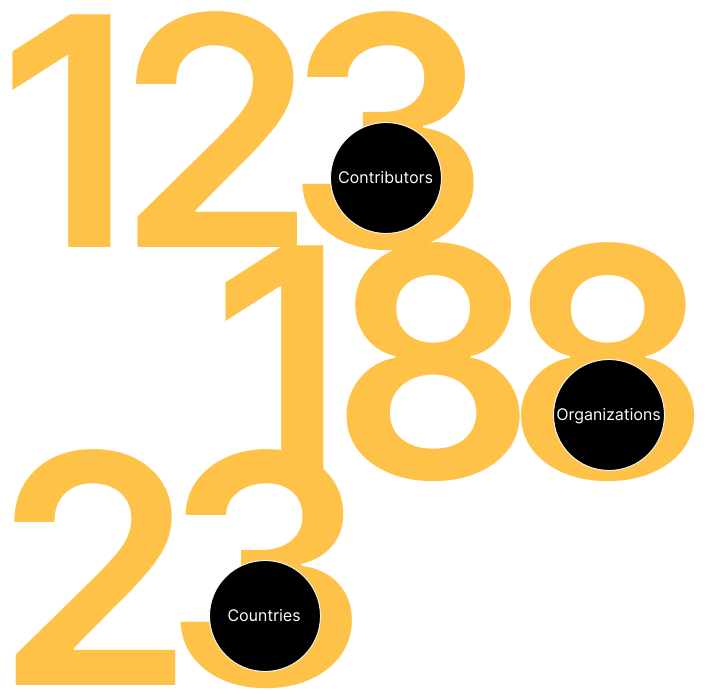
A total of 123 people from 23 countries and territories contributed to this State of the Field Gathering by responding to registration questions, joining online conversations, or both. More detailed information about these contributions can be found in the sections to follow.
The FEST Steward Reflections section features insights from FEST Initiating Steward Steve Waddell and Lead Steward Jen van der Meer. It offers an opportunity to view the outcomes of the first State of the Field Gathering through the eyes of experienced field builders with deep firsthand knowledge of field development patterns.
The Collective Narrative section provides a balanced overview of ideas discussed by participants in the State of the Field Gathering calls. It reflects what a wide range of actors who responded to our invitation considered important for field development at the time of the gathering, including tensions and contradictions that may reveal important questions for the field.
The Additional Individual Reflections section includes links to personal reflections by several State of the Field Gathering participants. After the draft of the collective narrative had been prepared, we shared it with the World Café participants, inviting them to reflect on how their experience of the gathering connected with their own work.
The next two sections—Network Map and Role Associations—are based on responses to our registration questionnaire from the 114 (of a total 123) contributors who allowed us to use their data for public reports. The Network Map illustrates self-reported memberships and other affiliations that connect over 80% of the contributors into a single network. The Role Associations section offers a conceptual framework of functional roles based on contributors’ descriptions of the roles they play in the field of financing systemic transformation. Both sections contain links to related interactive Kumu maps and preliminary observations drawn from the data.
Together, these sections are intended to support both individual and collective sensemaking rather than provide a definitive assessment of where the field stands. We invite readers to engage with the report as participants in an ongoing inquiry: to explore the maps, reflect on the narrative, notice what resonates with or challenges their own experience, and bring these insights into their relationships, practices, and decisions. The purpose is not to arrive at a single shared view of the field, but to develop the conditions for more informed, connected, and effective work toward systemic transformation.
We also strongly encourage you to join future State of the Field Gatherings. We will host State of the Field calls twice a year: in June to mobilize field actors for collective sensing documented in an annual State of the Field Report and in November to discuss the actors’ reflections on the report and the actions informed by the collective sensing experience. You can learn more about this ongoing work by following FEST’s LinkedIn page or using the contact details listed in the footer of this page.
01 · Introduction
“The purpose is not to arrive at a single shared view of the field.”
The field of financing systemic transformation (FST) is emerging through the work of people and organizations experimenting with new ways to mobilize resources, reshape financial practices, and support the transformation of social, economic, and ecological systems. As this work develops across domains and geographies, there is a growing need for spaces where actors can see beyond their own projects and immediate networks, learn from one another, and develop a more coherent understanding of the field as a whole.
Financial Ecosystems for Systemic Transformation (FEST) exists to accelerate the development of this field, which comprises those working toward financial transformation to greatly increase the flow of, and ease access to private, public, and philanthropic finance to address today’s polycrisis.
In this context, the State of the Field Gatherings were established by FEST’s Mapping & Sensing Group to engage field actors in an ongoing conversation about what we are seeing, learning, and trying together; to build a balanced overview of ideas that participants consider useful for field development; and to trace the history of the field’s evolution to help identify long-term trends.
The first State of the Field Gathering took place in June 2026. Contributions to the report were made through a registration form and a series of weaving calls, followed by an online World Café process. Contributions from the World Café specifically were synthesized using the Collective Narrative Methodology. This report highlights key outputs from that process. It combines several complementary forms of sensing and mapping, each offering a different perspective on the emerging field.
A total of 123 people from 23 countries and territories contributed to this State of the Field Gathering by responding to registration questions, joining online conversations, or both. More detailed information about these contributions can be found in the sections to follow.
The FEST Steward Reflections section features insights from FEST Initiating Steward Steve Waddell and Lead Steward Jen van der Meer. It offers an opportunity to view the outcomes of the first State of the Field Gathering through the eyes of experienced field builders with deep firsthand knowledge of field development patterns.
The Collective Narrative section provides a balanced overview of ideas discussed by participants in the State of the Field Gathering calls. It reflects what a wide range of actors who responded to our invitation considered important for field development at the time of the gathering, including tensions and contradictions that may reveal important questions for the field.
The Additional Individual Reflections section includes links to personal reflections by several State of the Field Gathering participants. After the draft of the collective narrative had been prepared, we shared it with the World Café participants, inviting them to reflect on how their experience of the gathering connected with their own work.
The next two sections—Network Map and Role Associations—are based on responses to our registration questionnaire from the 114 (of a total 123) contributors who allowed us to use their data for public reports. The Network Map illustrates self-reported memberships and other affiliations that connect over 80% of the contributors into a single network. The Role Associations section offers a conceptual framework of functional roles based on contributors’ descriptions of the roles they play in the field of financing systemic transformation. Both sections contain links to related interactive Kumu maps and preliminary observations drawn from the data.
Together, these sections are intended to support both individual and collective sensemaking rather than provide a definitive assessment of where the field stands.
The conversations captured here reveal a field with considerable energy, experimental activity, and ambition, but also unresolved questions about its boundaries, power dynamics, underlying assumptions, and pathways to meaningful change. Participants explored the relationship between transforming financial markets and moving beyond finance-centered approaches; the importance of community-led, Indigenous, and place-based practices; the need to rethink risk, wealth, and capital allocation; and the challenge of building coherence without erasing diversity. These ideas are not presented as conclusions endorsed by all contributors, but as signals that can inform further reflection, collaboration, and action.
This report should therefore be understood as a snapshot rather than a comprehensive or representative survey of the entire field. Its value lies not only in the findings it presents, but also the conversations it will generate and the questions it can help actors pursue. As the State of the Field Gatherings continue, we hope that successive reports will make it possible to observe changes over time, recognize emerging patterns, identify gaps and opportunities, and strengthen the field’s collective capacity to learn and act.
We invite readers to engage with the report as participants in an ongoing inquiry: to explore the maps, reflect on the narrative, notice what resonates with or challenges their own experience, and bring these insights into their relationships, practices, and decisions. The purpose is not to arrive at a single shared view of the field, but to develop the conditions for more informed, connected, and effective work toward systemic transformation.
We also strongly encourage you to join future State of the Field Gatherings. We plan to host State of the Field calls twice a year: in June to mobilize field actors for collective sensing documented in an annual State of the Field Report and in November to discuss the actors’ reflections on the report and the actions informed by the collective sensing experience. You can learn more about this ongoing work by following FEST’s LinkedIn page or using the contact details listed on the back cover of this report.

02 · FEST Steward Reflections
“The system is usually the missing unit of development to produce shared value.”

Steve Waddell, Initiating Steward
This report is valuable because it presents FST through the perspectives of participants across roles and geographies. It complements case studies, issue reports and analysis from stakeholder groups. This breadth is critical to develop field identity and transformative change, which requires new language, skills, structures, mental models, values, and processes. Simply adapting conventional approaches easily produces confused cooptation, although such adaptations can provide useful starting points if matched with a transformation commitment.
At the heart of the financing transformation efforts are questions about distribution of benefits from the use of capital and how it impacts our communities and environment. The report describes a field that advocates making people and the environment central, and treating finance as an enabling factor. Today, financial growth is a dominant end in itself.
The report is inspired by the need to identify pathways for engaging finance in meaningful change. Readers may find the broad findings somewhat unsatisfying, but naming roles and narratives is essential to building both individual and collective field identity and strategy coherence. Expanding that shared identity and deepening collaboration are critical to meeting the scale, complexity, time duration, and inner work of the financing transformation challenge.
I see the field moving from broad experimentation toward shared identity, new structures, and processes that integrate what has been learned. Two kinds of structures are emerging: community-based networks and organizations, such as FEST, TransCap, TWIST, and the BioFi Project; and the less represented legacy institutions—including governments, development banks, investment funds, and foundations—that are working to transform themselves. Bringing in the latter is more problematic, because it's usually represented by harder-to-identify specific programs and projects within institutions, such as what Sarah Edwards is doing as Managing Director, Sustainable and Impact Investing at Cambridge Associates and Sameera Mehra is supporting in the global foundation support network, WINGS.
Field interactions bring to mind my 1990s work in the United States, when legislation required banks and communities to work together for community benefits in terms of banks' business operations (as opposed to philanthropy). This makes me wonder why government, despite its key role in creating an enabling environment for FST, did not receive substantial attention in the collective narrative. This suggests that much more needs to be done to activate the government in support of FST.
As well, that American history reminds me that bankers and community organizations struggled with a basic question: should they hire bankers and train them in community development, or hire community developers and train them in banking? This may capture a core field capacity development challenge. Someone in finance will lose legitimacy with finance if they start talking like a community developer, and the same vice versa. They must learn to collaborate in co-creating equitable shared value and maintain their core constituency support. Meaningful interactions are necessary to develop innovations and translation mechanisms (language, new tools/strategies) that generate shared value. This type of value is being created by "ecosystems for FST" that FEST identified from examples of FST collaboration. It reveals how people are creating shared value through a shared system incorporating capital and community projects. The "system" is usually the missing unit of development to produce shared value.
This participant-based, systemic interaction perspective is reflected in the report's emergent, field participant approach to define roles and strategy through narrative development. The report is grappling with the need to move beyond historic labels and narratives to evolve roles and strategies that can support transformation. As the field develops, these roles will likely become more specialized and subdivide further and the strategy will continue to be refined. By identifying a current state, the report lays the foundation for asking the questions and supporting actions that are key for the field development.
Putting a process in place for regular reports is ambitious and valuable. Thanks so much for all the work and participation to report the State of the Field!
“Anything people make, we can make differently.”
Jen van der Meer, Lead Steward
A total of 123 people from 23 countries and territories answered an invitation to describe the state of a field called financing systemic transformation, and most of them described their own work as part of it. I did not expect that. The phrase still needs explaining almost everywhere I use it. The countries and territories named on the title page lean toward Europe and North America, with four in Africa, three in Latin America, and two in Asia. People from the UN's Food and Agriculture Organization, from a Cameroonian farm cooperative, from Climate Bonds and from SpiritDAO put their names on a form and said, yes, this is my field too.
If you believe, as I do, that the people closest to a problem are the ones who have its solutions, then this is the tent we need. The contributors came from public health, land stewardship, software, design, organizing, ministry, aid, and the academy, and from the parts of finance that advise, structure, and catalyze, because the financial ecosystem was not supporting their transformation. The first challenge is what we organize around, and the role analysis reflects it: some work next to, underneath, or around a funding or finance decision rather than making one, and a smaller group structures and catalyzes funding. It is also worth noticing who does not come when we gather this way. While we have financial advisors, nobody described themselves as sitting on the assets, and no pension fund, endowment, insurer, or family principal appears in the affiliations. That absence is worth watching from one gathering to the next.
The shape of the tent also tells us how much we have left to do. FEST (Financial Ecosystems for Systemic Transformation) describes the field as everyone working to increase the flow of finance, and the ease of access to it, for systems transformation. Flow is the part most of us can see, and several conversations in the narrative stayed there, on how grants are distributed, or where the institutional money gets blocked. But the architecture underneath the flow decides far more: who owns what, who bears risk, what return is expected and by whom, how a mandate gets written. It is one arrangement among many that people have made for sharing risk and time; savings circles, cooperatives, and communal tenure are others, in daily use by hundreds of millions. The financial industry we have is the one that got the law, the accounting standards, and the regulators behind it, which made it enforceable against strangers and let it reach planetary scale. Anything people make, we can make differently. Transformation, as I understand it, is a change in our relationships, and in which arrangements get that backing and on whose terms.
For the architecture to change we need people who can read the existing structure and write new ones. Nobody is able to do that alone. Each of us arrived fluent in one part of the system and unfamiliar with the rest, and each of us has something to unlearn. I can only speak for the corners of finance I have frequented: development finance, tech investment banking, venture capital, and endowments who all speak their own languages. We owe the people arriving from elsewhere patience if we are all committing to a transformation project. Finance vocabulary was built to run the system that exists, and questioning it is the first thing we owe each other. The report names a frustration running the other way too, with how little the field understands the constraints on those who allocate capital, and both are true. Other arrivals will know what their own fields need to give up. In the collective narrative you will find a field that has not yet reached consensus, and that is something to celebrate. We need a space for ongoing critical inquiry.
Where the arrivals have already met, the report shows practice: the living labs, the bioregional funds moving small amounts on community terms, the cooperatives, the system in Rwanda built for the most vulnerable. They are small, and they sit in this report beside the bigger institutions and the global networks. All are welcome in this tent.
The eight roles the team drew from contributors' own words tell us where the field is speaking from. The names, weaver, sensemaker, capacity cultivator, infrastructure steward, come from philanthropy and systems change, where a grant arrives first and the convening, mapping, and capacity work follows from it, even where the definitions underneath reach for instruments, vehicles, and ventures. Most of us learned that language somewhere, and it fits the gathering for today. It may not fit the field for long.
I have worked through three technology transitions in my career. In each one the roles people claimed at the start were not the roles the field needed once it grew, and none of them delivered the future we were aiming for, because the capital arrangements underneath changed faster than the roles did and ownership concentrated while we were still naming ourselves. This time the funding and financial arrangements are what we are willing to trouble, to question, and to reconfigure. I expect the roles here to change, and I would rather they change in a tent this wide than be settled in a smaller one.



03 · Collective Narrative
“Water should flow to where it is needed the most.”
From the Collective Narrative
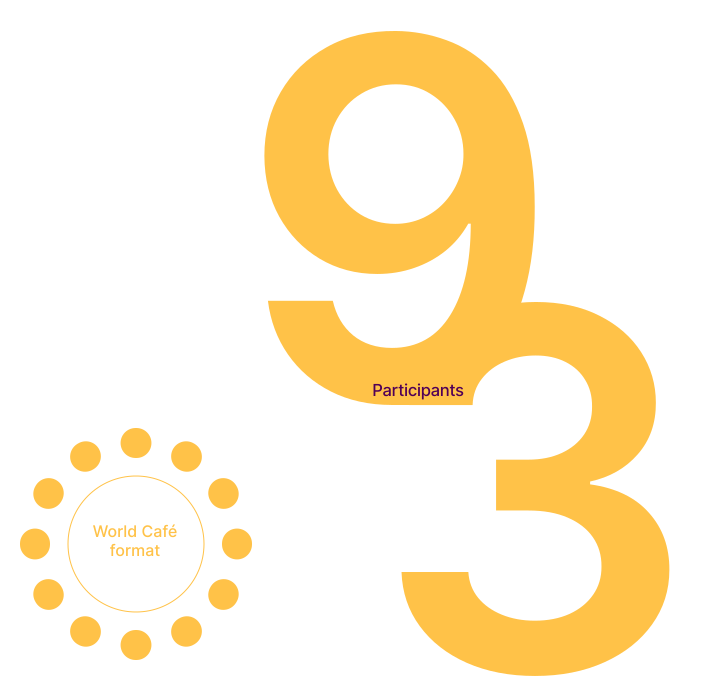
The main call of the first semi-annual State of the Field Gathering took place on June 18, 2026, following a series of weaving conversations held on June 9–13. The main call used a three-round World Café format, inviting participants to explore what feels most alive or important in their work, identify common themes and pivotal insights, and consider what would be essential to include in a collective narrative of the field at this moment.
This collective narrative is based on the transcripts of the report-outs from small group discussions along with short individual contributions from participants who felt compelled to add to these report-outs. According to the Collective Narrative Methodology stewarded by the Evolutionary Futures Lab, ideas represented in this dataset were clustered and edited for readability while preserving participants’ own language as much as possible. This work was done manually, without AI assistance other than spelling and punctuation recommendations.
Out of the 93 participants who contributed to this collective narrative, 77 did that directly by joining the main call on June 18 and 16 did so by participating in one of the weaving calls along with 13 others who joined both weaving calls and the main call, weaving these conversations together.
It is important to understand that this text is not a resolution or a public communication tool. It is a sensing tool: a balanced overview of the collective ideas shared by those who responded to FEST’s call to discuss the state of the field of financing systemic transformation. When you see contradictions, they usually point to tensions in the field. When you see something you disagree with, it is a signal from the field that you can choose to address, for example, by reflecting on that specific point and sharing your reflections with other actors.
Cluster 01An Emergent Field at an Inflection Point
We had really good conversations, and there were many things that came up. One of us suggested the metaphor of nested systems to describe these conversations because we discussed what is happening within the systems transformation tribe, around it, in the broader financial system, and even beyond that.
Some of us shared the assessment that the field of financing systemic transformation is emergent but has the potential for a paradigm shift, moving from extraction, separation, control, and linearity to collaboration, symbiosis, regeneration, and emergence. Many of us acknowledged that systems need to change, that there is a ton of opportunity for that change, that systems feel stuck, and that, in order to move forward from that stuckness, weaving and connective tissue are important.
We also discussed the urgency argument for investors: as AI will undeniably change our workforce economy and play a monumental part in today's systems, we are at an inflection point, and the time is now. At the same time, some of us wondered whether we can finance systemic transformation without first assuming that transformation is what reality is asking for.
Cluster 02Who Shapes the Field and Who is Missing?
While everyone was super appreciative of this space, we noticed that there are tensions emerging. One of the biggest tensions that we named is “Who shapes the field and who is missing?” Who are the gatekeepers, and what is our collective work that needs to happen to name risks to those gatekeepers?
Some of us noted that there are still silos and segregation in the field, and there was a pattern of “Are we listening?” While there is already a lot of diversity within the field, there is also a tension around listening even more broadly, seeing what the blind spots are, and identifying what is not being listened to. Are we listening to female voices? Are we listening to communities that are not represented on calls like this? Are we focusing on ourselves being part of the problem, and how much are we actually questioning ourselves in that regard?
Some of us see that there are actors in the field who are doing work that can be described as systems transformation work or financing systems transformation, but they would be talking the language of economic development, international aid, or the United Nations Sustainable Development Goals. Collaborating with those folks and seeing what they are doing seems to be an important aspect of our work. There were a lot of conversations throughout the call about making sure that all perspectives and all forms of diversity are included in the design process and in the ongoing functioning of the new systems.
Cluster 03The Entrenched Power of Legacy Institutions and the Value of Indigenous Stewardship
Several people pointed to the entrenched power of legacy institutions, noticing how the old system has a lot of influence in shaping the field, and a growing desire to bring in more voices from the edges. Some of us called for investors to learn what people who were not part of the old systems are doing. As we discussed Indigenous stewardship and the idea of becoming a keystone species, we talked about funding with the explicit condition that we take it for absolute granted that local people, Indigenous people who have taken care of the rainforest for all these millennia, can decide how to spend the money. In that way, we can indeed become a keystone species again.
Instead, most of us have been exporting what we do. We talked about capital still being trapped in the extractive paradigm and the frustration with the flow of capital showing up. Some of us noted that a lot of the money is locked in both by people's mindsets and by where it sits in old systems. More bluntly, as some of us put it, funders are very largely stuck in the old colonizing way of looking at the whole funding process and are very resistant to innovating how they practice funding, especially when it comes to funding innovation and impact.
Cluster 04Transforming Mindsets and Cultures to Redefine Wealth
As we explored different opportunities, some of us talked about learning journeys and narratives for wealth owners, as well as opportunities for investors more broadly, noting that there is a real opportunity around inner change and the mindset shifts that need to happen for the technical changes to follow. We looked into the questions of how to live the transformation, how to be the transformation, and what conditions allow for more of the new reality to emerge.
We talked about the relationship with money, how that narrative is central, and how there is an opportunity to shift that narrative. There was a conversation about the deep disconnection that extreme wealth creates and the need to live like the people we want to serve in this transformation.
There was a large cluster of conversations around the work itself and how it needs to be organized: cultivating a spiritual connection to the more-than-human, on their own terms; and building interoperable languages, not just expecting consensus in one unified language; staying humble; not being ego-driven; and making the space visible outside our bubble.
Some of us mentioned that this moment calls for a systems-level intervention that replaces wealth-based status symbols with regenerative ones—creating the cultural conditions for ecological healing at the community scale while remaining connected to regional and bioregional nodes. Funding the creation of frameworks and protocols for building regenerative community domains, where status is earned through ecological stewardship and care, rather than wealth or ownership, can provide the civic and ecological tooling needed. By replacing existing status symbols—which actively marginalize immigrants, the poor, and other out-groups—with new ones tied to participation and service, we can drive cultural change from the ground up.
Cluster 05From Shifting Markets to Supporting Bioregional and Place-Based Polycapital Work that Is Leading the Way
In one of our conversations, there was a narrative arc that started with "Yes, we can shift financial markets” and then moved into, “Hold up, wait a minute. We need to de-emphasize, reconsider, and reframe financial markets and capitalism as the dominant paradigms and think about acting as communities of humans to push back against the implications of remaining in these paradigms”.
This arc started with the idea that we actually can fix market failures and that, in order for the financial systems to play a role, we actually need to do this sort of work. And then there was the idea that we can create a narrative around what is possible. Because people do not necessarily understand the new ways of helping capital flow in capital markets, they may not realize that there are new ways, while the absence of new structures also makes discussing what is possible difficult.
But then someone pointed out that there actually are living experiments in the form of living labs where people are experimenting with alternative ways of moving capital and that it is important to recognize them, lift them up, and learn from what is currently happening.
In the context of bioregions specifically, there is a recognition that there are different needs and different narratives for different stakeholders. So, the structures that private landowners, for example, need are different from what communal landowners need. So part of the challenge lies in navigating these different needs and these different stories, as well as in not really knowing how to manage the impact or characterize the non-financial risks that emerge. This was the beginning of the shift to the, “Wait a minute. We need to rethink how we are looking at this.”
We discussed the opportunity to think of bioregional and place-based as leading the way, as an area where positive narratives are already taking place, where community and culture are at the leading edge of financing systemic transformation. The role of cooperatives came up as well when we discussed finding solutions.
In the broader context of the Global South, there is a need to shift the focus from financial capital as the primary driver to community-led solutions, recognizing the profound resources, knowledge, and bioregional governance already present. As some of us noted, utilizing Web3 platforms makes it possible to use data visualization to provide traceability for the community pooling of diverse types of capital. Those of us doing this work shared that financial capital represents only about 20% of the solution space, while the remaining 80% of the true riches lie in de-emphasizing financial capital while capturing and leveraging the potential of community and nature-based assets.
Cluster 06Moving to Strong Sustainability and Embedding the Value of Nature in the Economy
We also talked about the sustainability frame being too weak. Few funders are thinking about strong sustainability—the ecological economics idea aligned with Doughnut Economics' social foundations and planetary ceilings. Some of us argued that, at best, funders reach for weak sustainability or sustainable development, a fundamentally modernist colonial idea, that does not recognize the limits of our single shared planet or our universal human needs.
There was also an opinion that if we want nature to be valued in our economy, we have to be able to make it an asset. At the same time, some of us cautioned that recognizing nature, trust, relationships, and other living forms of wealth as assets is a double-edged tool: while it can create incentives to protect and regenerate them, it can also legitimize their degradation by assigning a price to harm, making careful governance essential.
Cluster 07Focusing on What We Can Control and Addressing Opportunities Close to Our Core Work
A big theme that came up in some of our conversations was focusing on what we can control and really leaning into the question of who is responsible for what. Where do we see the next horizon? Who might be the actors? What might be the areas where we see opportunities for change and narratives that need to be engaged across different audiences?
Investors, of course, are one group of actors that we talked about. Another stakeholder group was universities and university endowments. Some of us wondered what might be the principles that are running those endowments and suggested incorporating an intergenerational lens into conversations with university endowments, highlighting the disproportionate risk being transferred to coming generations. Talking about the mitigation of intergenerational risk brought some of our conversations back to the topic of risk in the context of timescales.
There was also an opinion that we need to radically invest in case studies focused specifically on improving healthcare, including cultural medicine such as Ayurveda and Traditional Chinese Medicine (TCM), and food-as-medicine projects that develop regenerative organic food systems. We just went through a global health crisis, and some of us asserted that the healthcare system, both mental and physical, has gotten worse: good clinicians are no longer able to financially survive or function with moral integrity, and ecological and climate funders and leaders are not connecting with ecological medicine as a priority despite poor and marginalized communities being impacted by big industries such as agriculture, big data, sewage, etc, and despite Doughnut Economics showing the holistic health crisis.
We also talked about the desire to go to living systems and seek understanding rather than impose the big, industrial, colonizing system that many of us have participated in, inherited, and benefited from. There was an opinion that, if we follow the money, it is very clear where the policies are broken and where there are huge sums of money sitting in bank accounts, where only 5% of foundation money gets distributed, and where pension funds invest in life-destructing industries. Some of us brought up the idea of aligning an organization's metabolism with returns rather than extraction, contrasting this metabolic coherence with certification schemes like B Corp or Regenerative Organic Certification, which, from this point of view, are still in themselves extractive. Donor-advised funds were also mentioned as one of the broken mechanisms.
Cluster 08Creating Mandates to Rightsize the Risk
Risk and the role of risk came up as one of the major themes. The reality is, as some of us argued, that when it comes to risk, oftentimes the risk is not captured correctly in conversations in the context of finance. Some of us shared an observation that the financial system is so insulated from what is actually happening which is related to the incentive mechanisms and how the system operates. We talked about rethinking risk in terms of what risk is for our communities.
There is a real opportunity to rightsize the risk, and there might be an opportunity to create mandates in order to keep the fire strong, support the reality, and acknowledge the risks that are taking place. One question that came up in our discussions was, “What is a different way of narrating around risk and clearly naming the risks and the opportunities for mitigating those risks?”
Cluster 09Unlocking Capital at Scale So It Can Move Like Water to Where It Is Needed the Most
Some of us who were representing weaving calls shared a frustration with where capital is flowing and whether it is sufficient for the challenges we are facing. Some of us also wondered how we go beyond comically low numbers ($5K–$2.5 million, as named by the bioregional movements) to numbers that actually align with the changes that are needed (tens of trillions of dollars).
Another frustration was with the misunderstanding of the constraints of those tasked with capital allocation: we discussed the image of going upriver, getting underneath the roots, and looking at what is blocked from moving. How do we go to the origins of capital and the substrates of capital needing new design logics? The substrate underneath it all was a theme, and many people used the word “substrate”.
So much of blended finance needs to be decided upfront, and the biggest potential influence is not on the prediction of impact. Using narrative-based pattern detection of value generation, we need to allow capital flows to be designed iteratively, based on emergence. On the public side, that means changing the rules and incentives of public investment into innovation, which still runs on old metrics, profit numbers, numbers of PhDs, bond investments, graduates, and jobs, with the expectation that shifting these metrics will influence private finance.
In the process of inviting what comes next, one piece of advice we discussed was that if we are not sure, we should set up a series of experiments and push resources toward what seems to be working. So, we should double down on learning and experimentation, and as we do that, be clear-eyed about the barriers to getting to a future state, understand the cost of the transition, who is paying, and who becomes winners and losers in both the short and long term.
At the same time, when we talked about systems transformation for the future, some of us ended up getting a really nice input around “Let’s build for the now” and “Let’s be happy with building for the now, and that way, we will be creating a future that future generations will be happy with.”. From that perspective, the future is not a place that we are navigating to, and the question is, “How are we living into life-affirming ways of being, living, and working?”
Some of us argued that this field is a journey of bold experimentation where radical creativity and innovation are crucial to enabling flows where they desperately need to go. Maybe money can be inspired by and use the wisdom of nature to become a tool for both nature and for transformation? Some of us started with water as a symbol and there were a lot of conversations around how water flows: water should flow to where it is needed the most, while people standing on the banks of a river can see the flow, but should not be able to control or manage it. We talked about how we can go about doing that.
Cluster 10Addressing the Fundamental Corruption of Power and Access that Shapes the Unequal Distribution of Gains and Losses
Some of us argued that the promise of systemic investing and related practices is that orchestration can enable institutional finance to come in at its risk/return profile but still be part of systems transformation. This raises important questions: Are market-rate returns in systems transformation truly possible, and if so, what roles do philanthropy, public investment, and community-rooted forms of polycapital play in making them possible? Viewed systemically, do these returns mobilize additional resources, or do they depend on value created and subsidized by other actors?
Some of us framed out an understanding of the mainstream financial apparatus as stuck in a realist framework of “Who wins, who loses, who pays, who profits?” This understanding includes an acknowledgment of uneven relationships of power and uneven relationships of access to money and resources. Some of our conversations named the staggering material and financial inequality in the world, and the very unequal distribution of gains and costs as the root cause of the contradictions that we see in the current system. There are fundamental corruptions in how we create, store, and transfer value between us.
Some of us emphasized that inaction and a lack of focused redistribution of resources toward socio-environmental initiatives carry the risk of significantly increasing the costs of repairing basic social reproduction and addressing negative environmental outcomes. In some of our conversations, we discussed a very impressive story from Rwanda, where the new system was intentionally built for the most vulnerable, and they ended up creating a system that worked for almost everyone.
Cluster 11Recognizing the Temporary Nature of Capitalism’s Dominant Logic and the Need to Go Beyond Financial System Redesign
There was a call to think about looking backward as well as forward. One way to characterize this is that it is perhaps a little bit difficult to talk about market failures when markets do not necessarily have consciousness and may not recognize that they are, in fact, failing. So, there is a need to rethink what the dominant logic of the past was and reckon with that, as we look toward the future. In our conversations, we called out the need to deeply question the fundamental architecture of finance and its extractive logic, and to bring those difficult questions and conversations into the rooms where the extractive finance is being practiced.
Holding those tensions, we need to go even further, beyond questioning the fundamental logics of finance, to thinking about the logics encompassing the nation-state and capitalism. We need to be willing and able to fundamentally question those logics, recognize that there were paradigms that preceded capitalism, and go back to those for clues.
Someone who had been involved in big finance for a while brought up the idea that we had reinvented finance before, so we should look at it as something that we have done before and that we can reinvent again. A similar idea also came from one of the weaving calls: capitalism as an instrument or tool is relatively new, so it is up to us to create something else, something newer, to replace it.
Some of us argued that it is imperative that we do not limit ourselves to financial system redesign but instead understand the limitations of institutional capital as an agent of transformation and its interdependencies with the economic system, in which market failure and legal guardrails determine the investable universe; the political system, which is currently captured and severely misinformed; culture, which is not well aligned with the prosocial potential inherent in human nature; education, which failed to nurture epistemic competence, science literacy, empathy, and wisdom, among other things.
Cluster 12Bringing In Sacred Solidarity, Organizing, Mobilizing, Collaborating, and Building a Wide Political Movement
Some of us also talked about solidarity as the sacred element that we need to bring in. We need to keep organizing, keep coming together, and keep our chins up because the challenges we face are so immense. We should also finally shift our focus from things to people, and in doing so, double down on relational fields: how to manage relationships and embrace a sense of class consciousness and collective political agency. Some of us named being relational and collaborative as core traits. We need to organize, mobilize, and fight for the future that we want.
From that point of view, the challenge of solving the polycrisis is a cultural and political one, not a technological one. Put in very simplified terms: we are currently in a historic class struggle over cultural hegemony, with a large majority of decent humans on one side and far-right nationalists, AI-billionaire robber barons, and the fossil fuel industry on the other. Let's mobilize and build a large, pragmatic tent of progressive populism/realism.
We need to engage with the democratic reform movement (civic assemblies, digital platforms) and in building social narratives. This points to the need to expand the space for collaboration between the public sector, philanthropy, and private capital.
Cluster 13Addressing the Narrative Complexity Problem and Appealing to a Broader Audience
We also discussed the idea that narratives are central to the shift and that there is a ton of opportunity for honing in on a few different narratives that respond to this conversation. However, we have a complexity problem that makes it hard to grasp the field or join it. Some of us think that this is a big problem.
How do we communicate all the complexity within a narrative or narratives? How do we practice epistemic diversity yet build narrative coherence for effective collective action? Who might be the voices that share these narratives? Who are the ambassadors of this work who are culturally super sexy? While this work is important, it also sounds so technical, so who might be the charismatic ambassadors who create unity and build a movement?
If we look at the smaller field of the folks who are on this call, we see that there is a lot of movement happening, and a lot of new projects being created. As a result, there is huge variation in the field, which is great, and a lot of people are acknowledging its importance. Yet this does create tensions around communicating and appealing to a broader crowd who might be interested in doing more of this work or contributing to this work.
Cluster 14Building Relational Fields and Removing Impediments to Trust, while Preparing for Dealing with the Hostility of the Dominant System
We talked about the importance of relational fields in financing systemic transformation and the metaphor of mycelium as a way of naming that. The “ecosystem” metaphor is different, going beyond the mycelial dynamic of making connections and supporting fine-grained flows of resources and information. Among many qualities that might be relevant to this field, ecosystems contain a diversity of relationship types, have hierarchical and nested layers of scale, can evolve in complexity over time, and are distinct from one another while also often having fuzzy boundaries between them. How might our financing processes more deeply embody such ecosystemic qualities?
The topic of trust as important connective tissue between this variety of actors was also mentioned a number of times, including through one example of how trust can be built through in-person events where, if the constraints are right, even people who might not be willing to change completely may still open up their views and explore whether this is the right crowd for them. And some of us mentioned Katapult as one of the places where we tried to do that, but there is a possibility to go even deeper. An in-person event can help remove impediments to trust and to what wants to happen. We also began a conversation about how to create a really deep sense-making space, we need to spend many days together, side by side.
Another topic that emerged was the tension between the nice trust-building work many of us do and a broader financial system that can be hostile to whatever restorative work is trying to happen. The incentive structures driving that dynamic are pretty clear, and one of our conversations was going in the direction that there is a point coming when the work will be less about inviting and sharing narratives—the “come join our lovely crowd” kind of work—and more about confronting hostility directed toward us. We should be prepared and have a strategy for what to do if we get on people's radars and piss some important people off.
Cluster 15Bracing for Chaos and Practicing Active Hope
We also discussed an epistemological question: a lot of the work around systems transformation is based on complexity science, and we consider ourselves operating within complexity, but what if we are already entering chaos in many places? What would that change about the way we organize, what we invest in, and how we work in general?
Regarding optimism and pessimism in conversations about the future, some of us suggested framing this less as an important factor in individual decision-making and more as an almost spiritual practice that each of us can engage in on our own—one that we do not have to bring into every single space or make highly present in every room.
There was a notion that whatever the answer to our inquiry is, we have to recognize that we cannot encapsulate it. This is bigger than all of us, so with that, “active hope” was the phrase that some of us highlighted as the main takeaway from our session.
04 · Network Map
“Over 80% of contributors are linked into a single network.”
In registering for the State of the Field Gathering, participants were invited to share their relevant affiliations in two categories: a main affiliation (if any) and one or more additional affiliations. This second bucket of additional affiliations included a pre-sorted list from FEST’s partner networks as well as a free entry field.
Out of the 120 people who registered, 114 gave permission to use their responses for public reports and maps. The six people who preferred to keep their responses confidential participated in online conversations that contributed to the collective narrative included in this report, but their registration data was excluded from the network analysis. Based on the available data, an interactive Kumu map visually linked contributors to the organizations and communities based on the connections indicated.
Of the 188 organizations and communities mentioned, 91 were “main” affiliations for at least one participant (marked as “Main” on the map), 81 were indicated to be memberships and secondary affiliations (marked as “Other” on the map), and 16 organizations and communities were marked by contributors as a main affiliation and as a secondary affiliation or membership.
57 contributors (50% of all respondents included in this report) reported FEST membership or affiliation. FEST’s key partners were also strongly represented.
The Summary view of the map represents the subnetwork of FEST and these five partners. The size of each organization’s node represents the number of contributors who indicated an affiliation with the organization or active membership in its community. Thickness of the connecting lines and their adjacent numbers represent the number of contributors connected to the pair of organizations.
The dataset features significant affiliation with more than one of the partner organizations (FEST, Katapult, TCI/SIS, and TWIST). An additional insight from the raw data is that every TWIST member who contributed to the State of the Field Gathering also indicated an affiliation with FEST, Katapult, and/or TCI/SIS, while around 20% of those affiliated with Katapult and TCI/SIS and over 40% of those affiliated with FEST did not indicate an affiliation with any of the other three communities.
Beyond FEST and its partners, the following organizations and communities were represented by three or more contributors: Center for Sustainable Finance and Private Wealth, CoFundEco, Evolutionary Funding Collaboratory, Evolutionary Futures Lab, Flourishing Enterprise Co-lab, Flourishing Enterprise Movement, Innovative Finance Initiative, Massachusetts Institute of Technology, and SI Network (Systems Innovation Network).
Of the organizations and communities, 32 (17% of the total) in the dataset were represented by more than one contributor. These entities link most of the contributors (over 80%) into a network that can be explored using the Detailed view on Kumu. Combined with the outcomes of other mapping initiatives, this network map can help actors better navigate the emerging landscape and discover new opportunities for learning and collaboration.
05 · Role Association
“Describe your work in the field, in your own words.”
The registration prompt
For this first State of the Field Gathering, instead of asking contributors to identify with roles from a pre-existing conceptual framework, we asked respondents to describe their work in the field of financing systemic transformation in their own words, highlighting that we mean their role in the field at large, not specifically in the FEST ecosystem.
About 25% of contributors used fewer than 10 words to describe their role, another 25% used more than 50 words, and the remaining 50% used between 10 and 50 words. We then gave them an opportunity to name that role in one or two words.
Our team used these descriptions and role names—over 4,500 words in total—to identify patterns and cluster similar descriptions and terms together. Eight functional roles emerged. The boundaries of each role are defined based on the language used by our contributors to describe their work. The roles we identified are as follows:
How roles were assigned
After this framework was constructed, three members of our team independently reviewed each contributor’s response and, when the response did not provide sufficient clarity, referenced contributors’ LinkedIn profiles and/or organizational websites. Each reviewer assigned one or more of the eight roles to each contributor, indicating whether the decision was based on the registration form response or on additional research.
The three reviewers then compared their results, discussed key points of divergence, and adjusted their assessments when felt compelled to do so by the evidence presented. Due to time limitations, disagreements that remained after a brief discussion were documented and left unresolved. In the end, about 96% of all role assignments were supported by at least two of the three reviewers, and around 62% were supported by all three. The remaining differences were largely due to varying levels of confidence in the available data and its interpretation.
It is important to note that these roles were assigned to participants specifically in relation to the field of financing systemic transformation. For example, someone who teaches permaculture to smallholder farmers and is building a collaborative funding practice is considered a Practice Builder and Financial Catalyst, but not a Capacity Cultivator, because their teaching is not directly related to financing systemic transformation. By contrast, someone working on the inner transformation of wealthholders to help them engage in systemic investing is considered a Capacity Cultivator in this context.
Role associations and the relationships among them were also mapped in Kumu using graph notation, with roles depicted as nodes and shared affiliations illustrated as an edge. The size of the node or circle reflects the number of contributors assigned to each role, while the thickness of the line and the adjacent number value represent the number of contributors assigned to both roles connected by that line.
In the Kumu map, the “Strong” option reveals only those roles confirmed by all three reviewers while the “Weak” option shows roles confirmed by at least two reviewers.
It is important to note that this taxonomy of roles is not intended to represent an objective or ideal for actors in the field. Rather, it is an interpretation of common patterns in actors’ self-perceptions at a specific moment in time informed by self-descriptions and supplementary research. It is designed both to inform how actors understand roles in the field and to help field builders introduce new roles and frameworks that may offer useful distinctions and can accelerate field development.
06 · Additional Individual Reflections
“Systems designed around the vulnerable benefit the wider whole.”
Usha Devi Venkatachalam
After the draft of the collective narrative was ready, it was shared with the participants of the main call with an invitation to write personal reflections connecting their State of the Field Gathering experience with their core work. Below are links to personal reflections that we collected, accompanied by AI-assisted summaries:
Kai Wagner
Kai Wagner argues that systemic investing requires coherence across diverse actors, rather than simply more capital or a shared vocabulary. Drawing on his experience with standards in digital identity, he identifies common structures, methods, and a shared understanding of the intended transformation as essential infrastructure for collective action. His reflection distinguishes genuine systems change from the performance of change and emphasizes that diversity of perspectives can strengthen a coalition when its members remain aligned around the system they seek to transform.
Full post on LinkedInDaniel Hires
Daniel Hires reflects on whether financing systemic transformation requires questioning the design of money itself, rather than only finding better ways to fund existing initiatives. He argues that money is not a neutral tool and that its expansion into care, agriculture, culture, and community life can reshape relationships around scarcity and transactions. While recognizing the value of finance, he invites practitioners to consider where monetary exchange is appropriate and where reciprocity, contribution, and other non-monetary forms of value may better support collective wellbeing.
Full post on LinkedInDonna Nelham
Donna Nelham challenges the persistence of extractive and dominator patterns within efforts to transform systems. She argues that claims of exceptional insight, selective appropriation of ideas, and the pursuit of recognition or funding can reproduce the very structures practitioners seek to change. Her reflection questions whether new forms of capital flow or improved transformation frameworks are sufficient, calling instead for a deeper reckoning with human exceptionalism, the limits of control, and the willingness to relinquish established ways of leading and knowing.
Full post on LinkedInUsha Devi Venkatachalam
Usha Devi Venkatachalam reflects on the shared principles underlying systemic finance and effective systems design. She highlights the importance of centering the most vulnerable, understanding how resources flow, and designing for regeneration, healing, and the more-than-human world. Her central insight is that systems designed around the needs of vulnerable people, other living beings, and nature can generate benefits that extend outward to the wider whole.
Full post on LinkedInTracey Rogers Brandt
Tracey Rogers Brandt describes a community-scale approach to regenerative transformation that replaces wealth-based status with recognition for ecological stewardship and care. Her proposed Regenerism framework connects local “Neighborsheds” through a federated guild and uses a Doughnut-based rubric to identify ecological and social needs. She calls for philanthropic support to develop and test the framework, followed by patient, public, and institutional capital to support new financing mechanisms that direct resources according to ecological need rather than conventional creditworthiness.
Full post on Substack07 · Masthead
“All are welcome in this tent.”
Jen van der Meer
Contributors
Contributors’ primary affiliations
30x30 UK · Agri-Planet Africa (APA) · AllThrive Education · Apiary X · Art of Civics · BioFi Project · Bioregional Systems Lab · Bold Ventures · Bounce Beyond · Brussels School of Governance (BSoG) · Camp Earnest · Capital Continuum · Carom · Center for Sustainable Finance and Private Wealth (CSP) · Circular Patterns · Climate Bonds Initiative · Climate KIC · Coalition for Impact (C4i) · CoFundEco: Cocreating Funding Ecosystems for Regeneration · ComeTogetherCK · Common Good Alliance · Complexity Partners · Cultivating Self · Dark Matter Labs · Dark Soil Labs · Design School for Regenerating Earth · EdelGive/SIX (Social Innovation Exchange) · Equity4Humanity · Evolutionary Funding Collaboratory (EFC) · Evolutionary Futures Lab (EFL) · Financing Agency for Social Entrepreneurship (FASE) · Feinberg Consulting · Financial Ecosystems for Systemic Transformation (FEST) · Flourishing Enterprise Co-lab · Food and Agriculture Organization (FAO) · Fresh Ventures · Full Spectrum Group · Gaiavision · Georgetown University · Global Impact Alliance · Global Philanthropy Forum · Global Regenerative Finance Initiative · Good People Dinners · Green Silk Road · Gruenig & Partners · Global Steering Group for Impact Investment (GSG Impact) · HB Invest Earth · Impact United Academy · Karma Capital · Katalist · Katapult · Komma Systems · Krishi Janani · Kwaxala · London School of Economics and Political Science · Massachusetts Institute of Technology (MIT) · Meraki People · Mycelial · Naked Innovations · Neighborhood Economics · Nia Impact Capital · Office for Responsive Environments (ORE) · Omidyar Group · Omplexity · Optivide · Parsons School of Design - The New School · PEACE Foundation · Perigon Wealth · Persimmon Co-Lab · Planetir · Project WEave · r3.0 (Redesign for Resilience & Regeneration) · Reason Street · Regen Bridge · RegenEarth Studio · Regeneration.VC · Regenerative Capital Group · Regenerative Earth · Reimagined Futures · Resonance Network · ROIGroup.life · Rypple · SI Network (Systems Innovation Network) · Social Innovation Canada · SpiritDAO · SVT Group · Systems Acumen for Youth-Led Development Solutions (SAYDS) · Systems Transformation Partners · The Structure Agency · Thunderbird School of Global Management · Toniic · Total Impact Capital · Trajectory Africa · TransCap Initiative · Transformational Investing in Food Systems (TIFS) · TWIST: Together We Invest for Systems Transformation · United Nations Development Programme (UNDP) · University of Wisconsin–Madison · Uptima Entrepreneur Cooperative · Victoria Forum · Vidia Equity · Village Capital · Wandusoa Organic Cameroon · Wave Pool · Wisdom Age Foundation · Work On Climate · Zero Emission Consortium
Contributors’ memberships & secondary affiliations
1000 Landscapes for One Billion People · Ashoka · B Corp · Babwisi Communities of Western Uganda and Eastern DRC Congo · Bamba Communities of Western Uganda and Eastern DRC Congo · Bay Delta Bioregion · Beloved Communities Network · BioFi Community · Bioregional Financing Facilities · Boann Social Impact · Capital Institute · Catalyst Now · Center for Sustainable Finance and Private Wealth (CSP) · Civic Strength Partners · Club of Rome · CoFundEco: Cocreating Funding Ecosystems for Regeneration · Collective Acceleration · Collective Action for Just Finance · Community Foundations Australia · Contra Costa County Resource Conservation District (CCRCD) · Denizen · Design School For Regenerating Earth · Doughnut Economics Action Lab · Equity Cubed · Ethex · Evolutionary Funding Collaboratory (EFC) · Evolutionary Futures Lab (EFL) · Farsight Society · Finance Transition Centre · Financial Ecosystems for Systemic Transformation (FEST) · Flourishing Business Community · Flourishing Enterprise Institute · Flourishing Enterprise Movement · Flourishing Startups · Food+Planet · Forward Global · Frequency · Global Regenerative Colab · Global Tapestry of Alternatives · Governance Futures Network · Harvard University · HATCH · How Women Invest · ICLEI (Local Governments for Sustainability) Southeast Asia · Impact Management Platform · Impactful Women · ImpactVC · Inclusive Capital Collective · Indigenous Batwa Communities · InnovateUK · Innovative Finance Initiative · Institute for a Digital Cooperative Economy · Invest Ahead · Invest for Better · Just Economy Institute · Kanthari Foundation · Katapult · Massachusetts Institute of Technology (MIT) · MIT Sustainability Initiative · Movement for the UN Flourishing Goals · Naked Innovations · Narrative Finance Lab · Nature Investment Hub · New Economy Coalition · New Paradigm Coalition · Next Economies Forum · Omprakash Ecosystem · Opportunity Collaboration · Pando Funding · Pleiades Network · ProSocial World · PYM: The Conscious Investors' Community · Real People's Fund · Regenerative Accelerationism · Regenerative Investing Community · Regenesis Institute for Regenerative Practice · RegenIntel · Rypple · Seed Commons · She's Geeky · SI Network (Systems Innovation Network) · Systemic Investing Research and Knowledge Consortium (SIRKC) · Social Value International · Solidaire · SuperBenefit · Systemic Finance Insights Lab · Toniic · Top Tier Impact · TransCap Initiative / Systemic Investing Summit · Tufts Food & Nutrition Innovation Institute · TWIST: Together We Invest for Systems Transformation · United Nations Convention to Combat Desertification (UNCCD) · Unity Effect · Uptima Entrepreneur Cooperative · Victoria Forum · Vikalp Sangam · Women Investing for a Sustainable Economy (WISE)